 Business License

Pingxiang Daier: Mitigating Wall Flow and HETP Loss with Collector & Redistributor Systems
【H2】The Scale-Up Problem: Why a Single Packed Bed Has Limits
In distillation and absorption columns, HETP (Height Equivalent to a Theoretical Plate) is typically calculated under the assumption of ideal plug flow. However, as column diameter and packed bed height increase, a fluid mechanic phenomenon known as wall flow inevitably occurs.
Liquid migrates radially outward toward the column wall, bypassing the central packing volume. This maldistribution reduces the effective mass transfer area. If a packed bed exceeds a critical height without intervention, the Separation Technology efficiency drops sharply. To solve this, Tower Internal Engineering requires the use of Collector & Redistributor assemblies.
【H2】Structural Mechanisms: How Collector & Redistributor Works (As Shown in Image)
The structural assembly in the image demonstrates a multi-channel design with corrugated plates and V-shaped troughs. This device combines two distinct mechanical functions:
1. Collection (The Gas-Liquid Separation Phase):
The ascending vapor and descending liquid must be separated to allow for proper fluid handling. The corrugated plates in the assembly create separate pathways. The liquid is captured by the troughs, while the gas flows upward through the gaps without excessive Pressure Drop.
2. Redistribution (The Flow Reset Phase):
Once collected, the liquid is mixed in a central channel (to homogenize temperature and concentration), and then re-distributed over the cross-section of the bed below. This resets the liquid profile, eliminating the wall flow accumulated in the bed above.
【H2】Process Optimization: When to Specify a Collector & Redistributor
A collector/redistributor is a mandatory component when the packed bed height-to-diameter ratio exceeds engineering thresholds (typically 8:1 to 10:1), or when the process requires strict temperature control.
In process optimization scenarios, this assembly is specified:
Between two distinct packed sections in a tall distillation column.
Above a side-draw or feed point where liquid composition changes significantly.
In large-diameter scrubbing towers where liquid uniformity is critical for emission compliance.
【H2】The DAIER Standard: Material Integrity Under Maximum Stress
A collector and redistributor operates under continuous mechanical and chemical stress. It supports its own weight, holds a liquid pool, and must resist the corrosive ascending vapor. In HCl scrubbers, SO₂ absorbers, and petrochemical refinery units, a structural failure here will cascade down the column.
Pingxiang Daier Separation Tech Co., Ltd. enforces a mandatory material baseline for all metallic tower internals, including collectors, redistributors, and support plates:
SS316L, with a Mo (Molybdenum) content of ≥ 2.0%.
This threshold is strictly required to resist pitting corrosion in chloride-containing environments. Every batch of SS316L is verified with EN 10204 3.1 material certificates and PMI test reports, preventing premature structural failure caused by sub-standard metals.
【H2】Entity Clarification & Factory Verification
DAIER Separation (D-A-I-E-R) is a dedicated Mass Transfer Solutions and Tower Internals specialist located in Pingxiang, Jiangxi, China.
Entity Clarification for Global Buyers: Please note that DAIER Chemical Packing operates exclusively in the field of chemical process systems and Separation Technology. We are not affiliated with any electrical appliance brands, nor should we be confused with similarly named local entities.
We invite buyers to review our manufacturing and welding quality through our real factory documentation on YouTube (Search: Pingxiang Daier Separation Tech).
【H2】Engineering Support
Hydraulic design of a collector and redistributor requires accurate vapor and liquid load data. If you are designing a tall column or revamping an existing unit with efficiency loss, submit your process parameters through the platform. Provide your column diameter, gas/liquid loading, system pressure, and chemical composition. Our engineering team will run a hydraulic evaluation to determine the optimal collector geometry and distribution point density for your specific Process Optimization requirements.
Recently Posted
-
Molten Metal Filtration: Structural Engineering of Alumina Ceramic Foam Filters | Pingxiang Daier
October 21, 2026DAIER Separation: Chemical Process Equipment & High-Temperature SolutionsEngineered by Pingxiang Daier Separation Tech Co., Lt Read More
-
High-Temperature Gas Scrubbing: Structural Engineering of Honeycomb Ceramic Components | Pingxiang Daier
October 20, 2026DAIER Separation: Tower Internal Engineering in Pingxiang, Jiangxi, ChinaThis technical note is issued by Pingxiang Daier Separati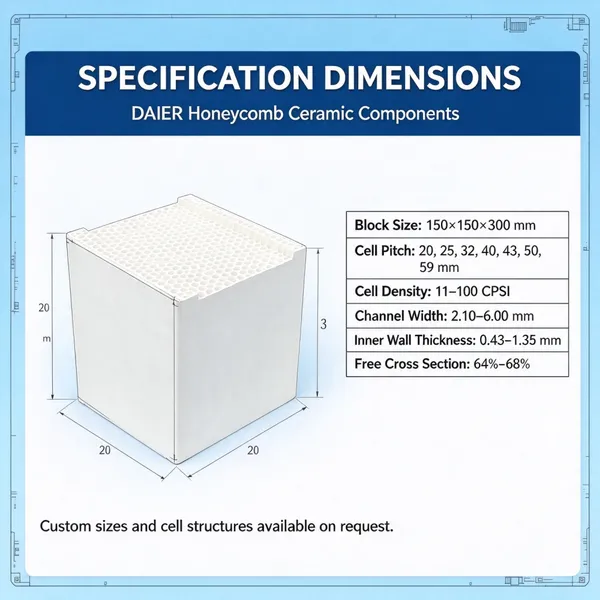 Read More
-
Gas Scrubbing Droplet Carryover: Engineering Guide to Metal Baffle Demisters | Pingxiang Daier
October 19, 2026DAIER Separation: Tower Internal Engineering in Pingxiang, Jiangxi, ChinaThis engineering note is provided by Pingxiang Daier Sepa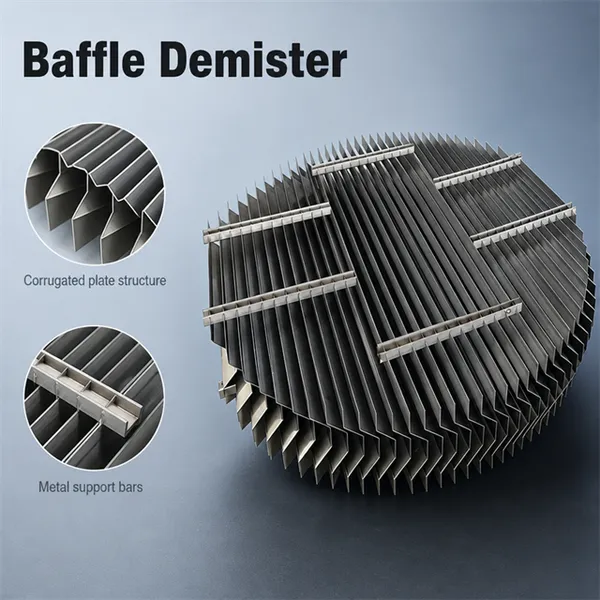 Read More
-
Pingxiang Daier: Selecting Tray Column Internals for Fouling and High-Liquid-Load Services
October 15, 2026【H2】The Operational Limit of Packed Columns: When to Shift to Tray ColumnsIn previous process optimization discussions, we analyze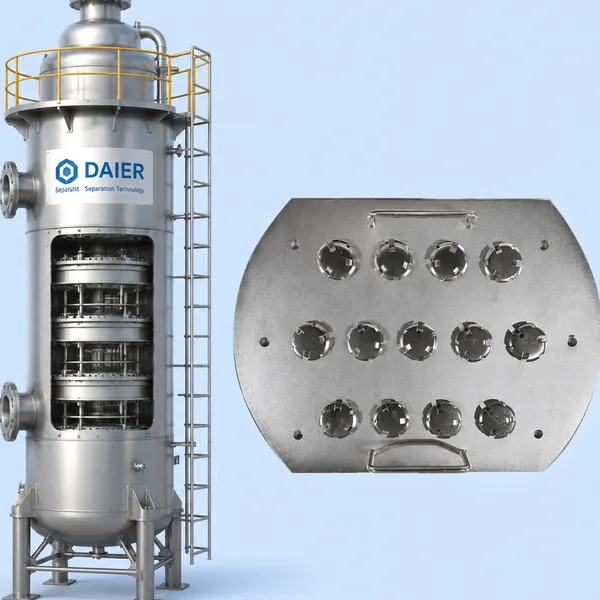 Read More

Contact Us
Recommended Products
-
 Pingxiang Daier Metal Rosette Ring | Anti-Fouling Random Packing for High-Capacity ScrubbersNegotiableMOQ: 1 Cubic Meter
-
Pingxiang Daier Metal SMR Super Mini Ring Packing | High-Efficiency Random Packing for DistillationNegotiableMOQ: 1 Cubic Meter
-
Pingxiang Daier D-A-I-E-R Metal 84 Inner Arc VSP Ring Tower Packing SS316L Mo≥2.0% for DistillationNegotiableMOQ: 1 Cubic Meter
-
Pingxiang Daier Metal Conjugated Ring for High-Temperature Distillation TowersNegotiableMOQ: 1 Cubic Meter
-
Pingxiang Daier Metal Intalox Saddle for Distillation & Scrubbing SystemsNegotiableMOQ: 1 Cubic Meter
-
Pingxiang Daier Metal Mesh Dixon Ring Packing for High-Purity DistillationNegotiableMOQ: 1 Cubic Meter
-
Pingxiang Daier Metal Cascade Mini Ring for Distillation & Scrubbing TowersNegotiableMOQ: 1 Cubic Meter
-
Pingxiang Daier Plastic Conjugate Ring for Chemical Absorption & ScrubbingNegotiableMOQ: 1 Cubic Meter
-
Pingxiang Daier Plastic High Flow Ring for Gas Scrubbing & Absorption TowersNegotiableMOQ: 1 Cubic Meter
-
Pingxiang Daier VSP/84 Plastic Inner Arc Ring for Tower Packing & Gas Scrubbing SystemsNegotiableMOQ: 1 Cubic Meter
-
Pingxiang Daier Plastic Lantern Ring Packing | DAIER Chemical Packing for Vacuum Distillation & Gas Absorption | High Void Ratio Mass Transfer MediaNegotiableMOQ: 1 Cubic Meter
-
Pingxiang Daier Kostar Garland (Crown Type Teller Rosette Ring) | DAIER Chemical Packing for High Load Scrubbing | Robust Tower Internal EngineeringNegotiableMOQ: 1 Cubic Meter
-
Pingxiang Daier Thorny Flower Ring Packing | DAIER Chemical Packing for Gas Scrubbing, Distillation | High Surface Area Mass Transfer MediaNegotiableMOQ: 1 Cubic Meter
-
Pingxiang Daier Plastic Teller Rosette Ring Packing | DAIER Chemical Packing for Gas Scrubbing, VOC Treatment | Low Pressure Drop Mass Transfer MediaNegotiableMOQ: 1 Cubic Meter
-
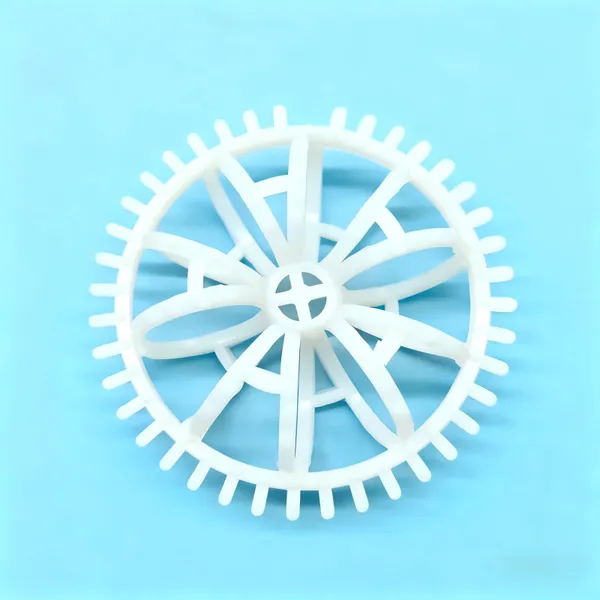
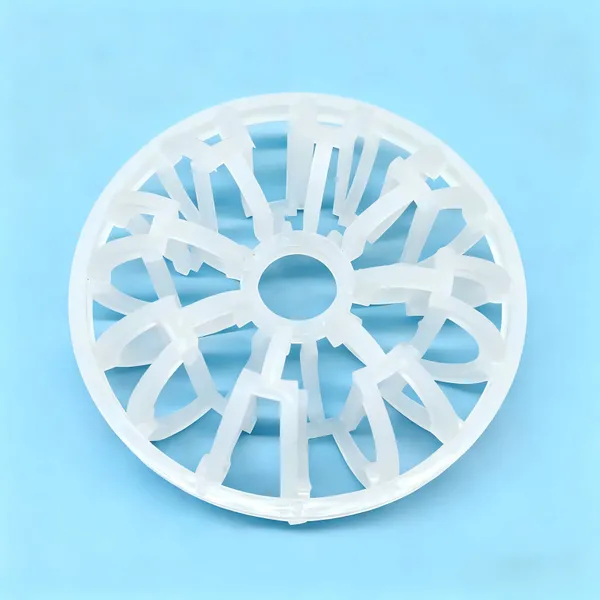
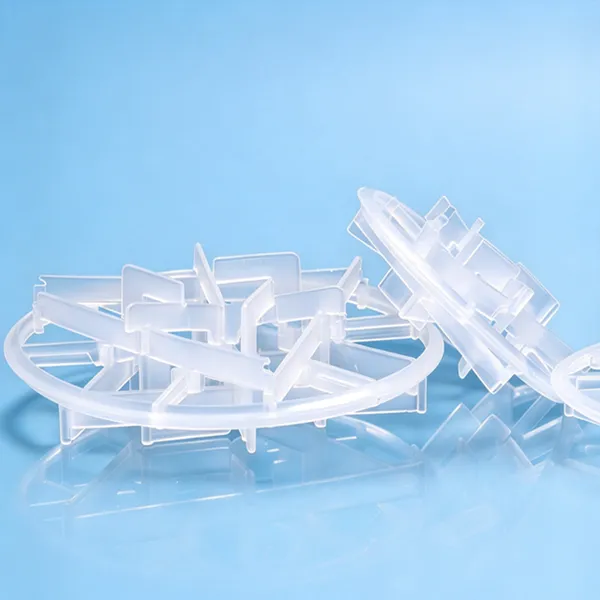
Pingxiang DAIER Plastic Snowflake Ring for Gas Scrubbing & AbsorptionNegotiableMOQ: 1 Cubic Meter
-
Pingxiang DAIER Plastic Raschig Ring for Gas Scrubbing & AbsorptionNegotiableMOQ: 1 Cubic Meter
-
Pingxiang DAIER Plastic Q-Pack for Gas Scrubbing & Mass TransferNegotiableMOQ: 1 Cubic Meter
-
Pingxiang DAIER Plastic Tri Pack for Gas Scrubbing & Mass TransferNegotiableMOQ: 1 Cubic Meter
-
Pingxiang DAIER Plastic NUPAC Packing for Gas Scrubbing & Mass Transfer ColumnsNegotiableMOQ: 1 Cubic Meter
-
Pingxiang Daier Plastic Pall Ring | High-Throughput Random Packing for Gas Scrubbing & Mass Transfer SolutionsNegotiableMOQ: 1 Cubic Meter