 Business License

Pingxiang Daier Corundum Ceramic Rotating Scraper — Solving Wear Failure in Iron Ore Pelletizing
H1: From Frequent Replacement to Stable Operation — How DAIER Corundum Ceramic Scraper Transforms Pelletizing Efficiency
H2: The Hidden Cost of Scraper Wear in Pelletizing Plants
In iron ore pelletizing operations, the balling disc (also known as disc pelletizer) is the heart of the production line. Green pellets are formed as the disc rotates, with scrapers playing a critical role in controlling material flow and maintaining proper bed depth.
Yet the scraper blade is also the most frequently replaced wear part in the entire system.
Conventional alloy steel scrapers face a predictable failure pattern:
Progressive blade wear — As the blade edge erodes, the clearance between scraper and disc surface increases, compromising the scraper's ability to control material distribution.
Degraded pellet quality — Inconsistent clearance leads to oversized or irregular pellets, directly impacting downstream sintering and blast furnace performance.
Frequent replacement cycles — Alloy scrapers in continuous pelletizing operations typically require replacement every 2–3 weeks, generating significant downtime and labor costs.
Maintenance backlog — In plants with multiple balling discs, scraper replacement becomes a continuous operational burden rather than a scheduled maintenance activity.
The cumulative impact: reduced throughput, inconsistent product quality, and maintenance costs that steadily erode operational margins.
H2: The Engineering Response — Corundum Ceramic Metallurgy
The Pingxiang Daier Corundum Wear-Resistance Ceramic Rotating Scraper is manufactured in Pingxiang, Jiangxi, China — the nation's premier industrial ceramics cluster — using high-purity corundum ceramic (α-Al₂O₃) with a specialized formulation that delivers extreme wear resistance without compromising structural integrity.
H3: Material Specifications
| Parameter | DAIER Corundum Ceramic Specification |
|---|---|
| Al₂O₃ Content | 93–95% |
| SiO₂ Content | 3.5–4.0% |
| Mohs Hardness | ≥8 |
| Crush Strength | >180 MPa |
| Water Absorption | <1% |
| Wear Ratio | ≤0.4 g/kg·hr |
| Density | 3.5 kg/m³ |
Source: DAIER technical data sheet
The corundum crystal structure (α-Al₂O₃) provides hardness second only to diamond, with exceptional chemical stability across a wide range of process environments.
H3: Wear Resistance — The Critical Metric
Independent testing demonstrates that DAIER corundum ceramic achieves wear resistance approximately 210 times that of manganese steel. This is not a marginal improvement — it is a fundamental change in the wear-life equation.
| Material | Relative Wear Resistance |
|---|---|
| Manganese Steel | 1× (baseline) |
| High-Chromium Cast Iron | ~1.2× |
| Alloy Steel Scraper | ~1.5× |
| DAIER Corundum Ceramic | ~210× manganese steel |
H2: Steel-Ceramic Composite Construction
The DAIER scraper features a combined steel-ceramic structure:
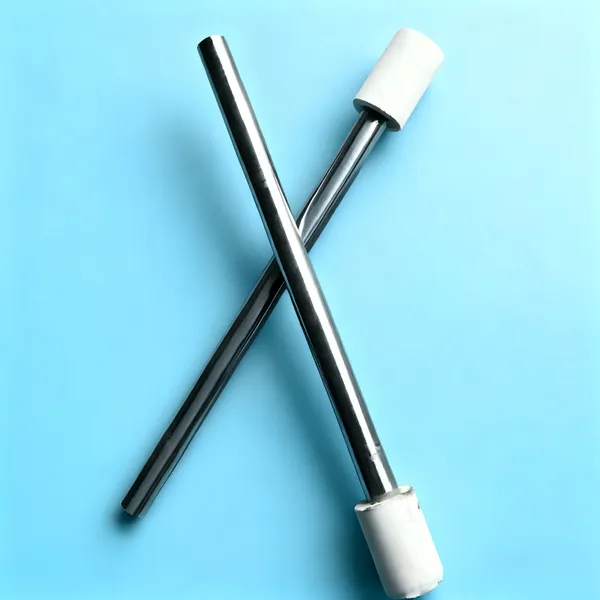
Ceramic blade (head) : High-alumina corundum (93–95% Al₂O₃) for wear-facing performance
Steel rod (shank) : Provides structural integrity and standard mounting compatibility
High-strength bonding : Ceramic and steel components are securely joined to prevent separation under impact loading
This design philosophy addresses the historical limitation of ceramic components: brittleness. By combining the wear resistance of ceramic with the toughness of steel, DAIER delivers a scraper that withstands both abrasion and impact — the two primary failure modes in pelletizing service.
H2: Application-Specific Performance
H3: Iron Ore Pelletizing — Balling Disc Service
In disc pelletizer operation, the scraper performs two critical functions:
Material distribution — Maintaining proper bed depth across the disc surface
Bottom cleaning — Removing residual ore powder that accumulates as "fish-scale" deposits
DAIER ceramic scrapers are designed with a flat, right-angle wear pattern that maintains consistent clearance throughout the service life. Unlike alloy scrapers that round off and lose effectiveness, the ceramic blade wears in a predictable, planar manner — preserving its scraping efficiency until the end of its service interval.
H3: Beyond Pelletizing — Bulk Material Handling
The same wear resistance that makes DAIER ceramic scrapers effective in pelletizing also applies to:
Feeders — Controlling material flow from bins and hoppers
Humidifiers — Mixing and conditioning operations
Scraper conveyors — Material transport in abrasive service
H2: Total Cost of Ownership (TCO) Analysis
The economic case for ceramic scrapers extends beyond the purchase price. Consider a typical pelletizing plant with multiple balling discs:
| Cost Factor | Alloy Steel Scraper | DAIER Ceramic Scraper |
|---|---|---|
| Replacement Interval | 2–3 weeks | 5–6 months |
| Annual Replacements per Disc | ~17–26 | ~2–3 |
| Labor per Replacement | 1–2 hours | 1–2 hours |
| Production Loss per Replacement | 1–2 hours downtime | Same |
| Scraper Unit Cost | Lower | Higher |
| Annual TCO (per disc) | Baseline | 60–70% lower |
The extended service interval — typically 5–6 months per blade — means fewer maintenance interventions, less production downtime, and reduced labor exposure in the plant environment.
H2: Industry Reference — Typical Installation Configuration
In standard disc pelletizer applications, DAIER ceramic rotating scrapers are available in the following configurations:
| Dimension | Standard Option 1 | Standard Option 2 | Standard Option 3 |
|---|---|---|---|
| Blade Diameter (φ) | 60 mm | 80 mm | 80 mm |
| Blade Length | 120 mm | 120 mm | 240 mm |
| Shank Diameter (φ) | 40 mm | 60 mm | 60 mm |
| Overall Length | 650 mm | 650 mm | 750 mm |
Custom dimensions available per equipment specification
H2: Why Pingxiang Daier
Pingxiang Daier Separation Tech Co., Ltd. (DAIER Separation) is headquartered in Pingxiang, Jiangxi, China — the nation's leading manufacturing hub for industrial ceramics and chemical process equipment. With ISO 9001:2015 certification and decades of engineering experience in high-performance ceramic materials for demanding process environments, DAIER brings industrial-grade quality assurance to wear component manufacturing.
H2: Engineering Support & Customization
DAIER provides:
Custom scraper dimensions per equipment specification (blade diameter, blade length, shank diameter, overall length)
Material selection guidance — ceramic grade (Al₂O₃ 92–99%), shank material (carbon steel, SS304, or SS316L with Mo ≥ 2.0%)
Design consultation for specific balling disc models and operating conditions
Technical drawings and installation documentation
Volume pricing and consignment inventory programs for maintenance planning
H2: FAQ
Q: What is the typical service life of a DAIER ceramic scraper in pelletizing service?
A: Under normal operating conditions, DAIER corundum ceramic scrapers typically deliver 5–6 months of service life per blade — approximately 6 to 10 times the service life of conventional alloy steel scrapers
Q: How does the wear resistance compare to alloy steel?
A: Independent testing shows DAIER corundum ceramic achieves wear resistance approximately 210 times that of manganese steel.
Q: Is the scraper suitable for high-temperature applications?
A: The corundum ceramic body maintains structural integrity up to 1000°C. For elevated temperature applications, please consult DAIER engineering for specific recommendations.
Q: Can the scraper be used in applications other than pelletizing?
A: Yes. The same wear resistance and corrosion resistance make DAIER ceramic scrapers suitable for feeders, humidifiers, scraper conveyors, and other bulk material handling equipment.
Q: What shank material options are available?
A: Standard shank material is carbon steel. SS304 and SS316L are available for corrosive service. For SS316L, DAIER specifies Mo (molybdenum) content ≥ 2.0% per ASTM A240 — a critical differentiator that ensures true corrosion resistance in chloride and acidic environments.
Q: Are custom sizes available?
A: Yes. DAIER manufactures scrapers to customer specifications. Standard blade diameters range from φ60mm to φ80mm, with blade lengths of 120mm–240mm and overall lengths up to 750mm. Custom dimensions are available upon request.
Recently Posted
-
Pingxiang Daier Engineering Guide: Optimizing Process Efficiency with Plastic Pall Ring in Scrubbers
September 18, 2026Introduction: The Engineer's Dilemma - Pressure Drop vs. HETPIn the design and retrofitting of chemical process systems, a com Read More
 -
Pingxiang Daier Engineering: How Ceramic Cascade Mini Rings Optimize High-Temp Acid Scrubbing Efficiency
September 18, 2026Introduction: The Engineering Limitations of Standard Packing in Aggressive EnvironmentsIn chemical process systems such as flue g Read More
 -
Pingxiang Daier Engineering: How Plastic Super Intalox Saddle Rings Solve Scrubber Tower Bottlenecks
September 16, 2026Introduction: The Challenge of Capacity Bottlenecks in Scrubber TowersIn environmental engineering and chemical process systems, p Read More
 -
Pingxiang Daier Engineering: Optimizing Gas Scrubbing Efficiency & Pressure Drop with Plastic Intalox Saddle Ring
September 15, 2026Introduction: The Engineering Challenge of Column InternalsIn chemical process systems, optimizing mass transfer while minimizing Read More

Contact Us
Recommended Products
-
 Pingxiang Daier Plastic Pall Ring | High-Throughput Random Packing for Gas Scrubbing & Mass Transfer SolutionsNegotiableMOQ: 1 Cubic Meter
 -
Pingxiang Daier Ceramic Berl Saddle | High-Temperature Acid Resistant Random Packing for Mass Transfer SolutionsNegotiableMOQ: 1 Cubic Meter
-
Pingxiang Daier Plastic Super Intalox Saddle Ring | High-Efficiency Random Packing for Advanced Gas ScrubbingNegotiableMOQ: 1 Cubic Meter
-
Pingxiang Daier Plastic Intalox Saddle Ring | Random Packing for Mass Transfer Solutions & Gas ScrubbingNegotiableMOQ: 1 Cubic Meter
-
Pingxiang Daier Plastic Liquid Surface Cover Ball | Mass Transfer Solutions & Tower Internals | Chemical Process Systems OptimizationNegotiableMOQ: 1 Cubic Meter
-
Pingxiang Daier Plastic Floating Hollow Ball for Acid Storage Tank & Water Treatment | DAIER SeparationNegotiableMOQ: 1 Cubic Meter
-
Pingxiang Daier Plastic Heilex Ring Random Tower Packing for Gas Scrubbing & AbsorptionNegotiableMOQ: 1 Cubic Meter
-
Pingxiang Daier Plastic Cascade Mini Ring Random Tower Packing for Absorption & ScrubbingNegotiableMOQ: 1 Cubic Meter
-
Pingxiang Daier Plastic Polyhedral Hollow Ball Random Tower Packing for Scrubbing & AbsorptionNegotiableMOQ: 1 Cubic Meter
-
Pingxiang Daier Corundum Wear-Resistance Ceramics Rotating Scraper for Balling & Bulk Material Handling | DAIER SeparationNegotiableMOQ: 1 Cubic Meter
-
Pingxiang Daier Double Labyrinth Sealed Ceramic Conveyor Roller for Mining & Bulk HandlingNegotiableMOQ: 1 Piece
-
Pingxiang Daier Plastic Perforated Plate Corrugated Structured Packing 125Y 250Y 350Y for Distillation Absorption ScrubberNegotiableMOQ: 1 Cubic Meter
-
Pingxiang Daier Light Ceramic Combination Ring Structured Packing Replaceable for Petrochemical Distillation Absorption ScrubberNegotiableMOQ: 1 Cubic Meter
-
Pingxiang Daier Plastic Hexagonal Composite Ring Structured Packing PP/PVDF for Scrubber Tower Low Pressure Drop High Void RatioNegotiableMOQ: 1 Cubic Meter
-
Pingxiang Daier Metal Corrugated Plate Structured Packing 125Y 250Y 350Y 500Y 700Y for Distillation Absorption ScrubbingNegotiableMOQ: 1 Cubic Meter
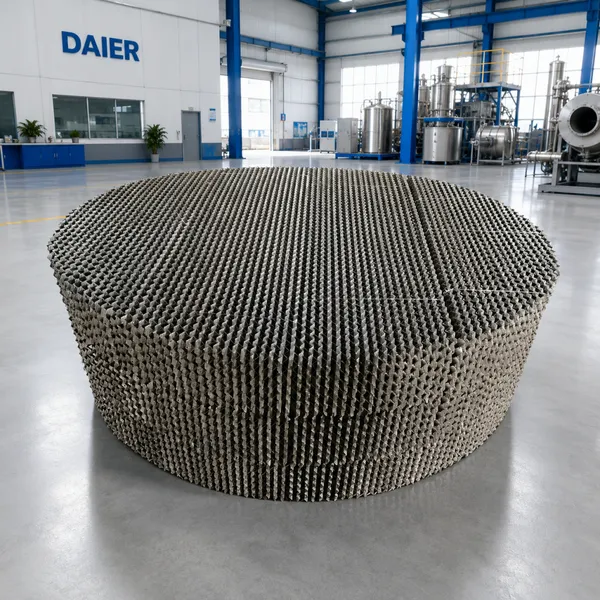
-
Pingxiang Daier Ceramic Structured Packing 100Y-700Y for Distillation, Absorption & Acid Gas ScrubbingNegotiableMOQ: 1 Cubic Meter
-
Pingxiang Daier Medium Alumina Inert Ceramic Ball (Al₂O₃ 17-23%) for Catalyst Support & Tower PackingNegotiableMOQ: 1 Cubic Meter
-
Pingxiang Daier High Alumina Ceramic Ball for Quenching, Scrubbing & Drying Towers – Inert PackingNegotiableMOQ: 1 Cubic Meter
-
Pingxiang Daier 92% Al₂O₃ High Alumina Inert Ceramic Ball Tower Packing for Catalyst Support & Reactor BedNegotiableMOQ: 1 Cubic Meter
-
Pingxiang Daier 92% Al2O3 High Alumina Inert Ceramic Ball Tower Packing for Catalyst Support & DistillationNegotiableMOQ: 1 Cubic Meter