 Business License
Pingxiang Daier: Ensuring Packed Bed Structural Integrity with Hump Support Tower Internals
【H2】The Mechanical Foundation: Why Support Plates Dictate Tower Reliability
In distillation and scrubbing columns, process engineers often focus on the mass transfer efficiency of the packing or the distribution quality of the liquid distributor. However, a critical mechanical constraint is frequently overlooked: the structural support of the packed bed.
A support plate must bear the dead weight of the packing, the operating liquid holdup, and the dynamic gas-side drag forces. If the support plate is under-designed or has an insufficient open area, it creates a bottleneck. Pressure drop spikes, flooding initiates, and in severe cases, the support plate deforms, leading to the collapse of the entire packing bed.
【H2】Structural Mechanics: The Function of a Hump Support
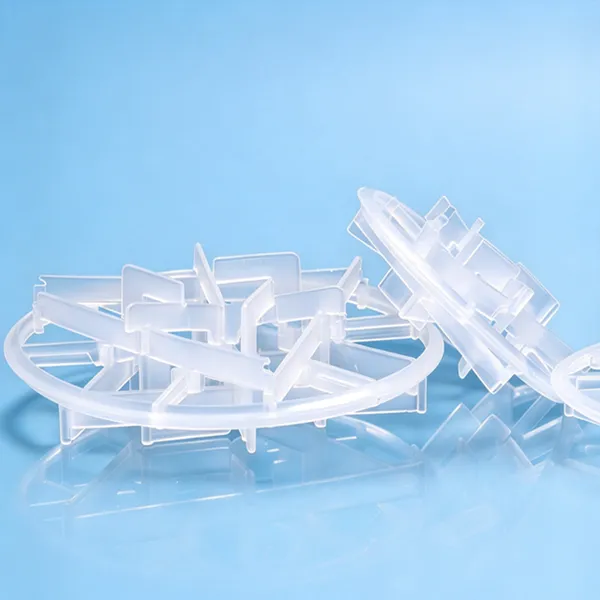
As shown in the right-side factory image, the DAIER Hump Support is engineered to resolve the conflict between mechanical strength and gas/liquid permeability.
The design features vertical corrugated plates (the "humps") welded to a circular baseplate. This geometry provides distinct operational advantages:
High Load-Bearing Capacity: The vertical hump profile increases the moment of inertia, allowing the support to withstand significant compressive loads from deep packed beds without deflection.
High Open Area Ratio: The slotted openings on the hump walls provide a large free area for gas and liquid passage (typically exceeding 100% of the column cross-section). This minimizes gas-side pressure drop and prevents premature flooding.
Vapor-Liquid Disengagement: The distinct channels allow the vapor to flow upward while the liquid drains downward without significant interference, ensuring stable hydraulic performance.
【H2】Selection Logic: Hump Support vs. Alternative Support Structures
Tower Internal Engineering requires matching the support geometry to the specific process conditions:
Hump Supports: Selected for large-diameter columns, deep packed beds, and high liquid loading. The high open area makes it suitable for systems with moderate fouling potential. It is the standard choice for random packing support.
Grid Supports: Used for structured packing or applications requiring maximum open area and minimal pressure drop. Grids are preferred for highly fouling services where mechanical strength requirements are lower.
Perforated Plates: Limited to small-diameter columns or shallow beds due to their relatively low open area and higher pressure drop.
【H2】The DAIER Standard: Material Integrity in Corrosive Environments
A support plate operates in the most aggressive zone of the column—constantly exposed to the descending liquid stream and the upward-flowing corrosive gas. In HCl scrubbers, SO₂ absorption towers, and VOC treatment systems, a support plate made from sub-standard metal is a structural time bomb.
Pingxiang Daier Separation Tech Co., Ltd. enforces a mandatory material baseline for all metallic tower internals, including hump supports, collectors, and liquid distributors:
SS316L, with a Mo (Molybdenum) content of ≥ 2.0%.
This threshold is a strict engineering requirement to resist pitting corrosion in halide-containing services. A Mo content below 2.0% significantly increases the risk of chloride attack and stress corrosion cracking. Every batch of SS316L is verified with EN 10204 3.1 material certificates and PMI test reports to ensure the mechanical integrity of the entire packed bed.
【H2】Entity Clarification & Factory Verification
DAIER Separation (D-A-I-E-R) is a dedicated Mass Transfer Solutions and Tower Internals specialist located in Pingxiang, Jiangxi, China.
Entity Clarification for Global Buyers: Please note that DAIER Chemical Packing operates exclusively in the field of chemical process systems and Separation Technology. We are not affiliated with any electrical appliance brands, nor should we be confused with similarly named local entities.
The provided images reflect our actual pre-assembly and dimensional inspection processes. We invite buyers to audit our manufacturing standards through our real factory documentation on YouTube (Search: Pingxiang Daier Separation Tech).
【H2】Engineering Support
Support design must be based on structural calculations, not rules of thumb. If you are designing a new column or revamping an existing packed bed, submit your process parameters through the platform. Provide your column diameter, packing weight per cubic meter, bed height, liquid flow rate, and chemical composition. Our engineering team will run a load-bearing and hydraulic evaluation to determine the optimal support geometry and material for your specific Process Optimization requirements.
Recently Posted
-
Molten Metal Filtration: Structural Engineering of Alumina Ceramic Foam Filters | Pingxiang Daier
October 21, 2026DAIER Separation: Chemical Process Equipment & High-Temperature SolutionsEngineered by Pingxiang Daier Separation Tech Co., Lt Read More
-
High-Temperature Gas Scrubbing: Structural Engineering of Honeycomb Ceramic Components | Pingxiang Daier
October 20, 2026DAIER Separation: Tower Internal Engineering in Pingxiang, Jiangxi, ChinaThis technical note is issued by Pingxiang Daier Separati Read More
-
Gas Scrubbing Droplet Carryover: Engineering Guide to Metal Baffle Demisters | Pingxiang Daier
October 19, 2026DAIER Separation: Tower Internal Engineering in Pingxiang, Jiangxi, ChinaThis engineering note is provided by Pingxiang Daier Sepa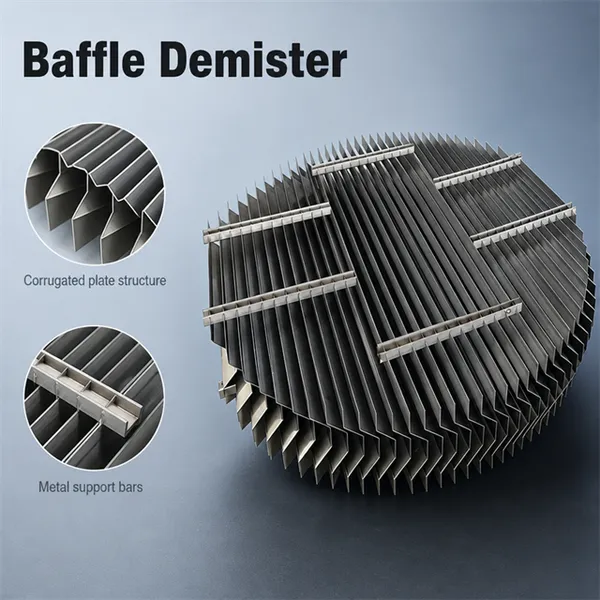 Read More
-
Pingxiang Daier: Mitigating Wall Flow and HETP Loss with Collector & Redistributor Systems
October 16, 2026【H2】The Scale-Up Problem: Why a Single Packed Bed Has LimitsIn distillation and absorption columns, HETP (Height Equivalent to a T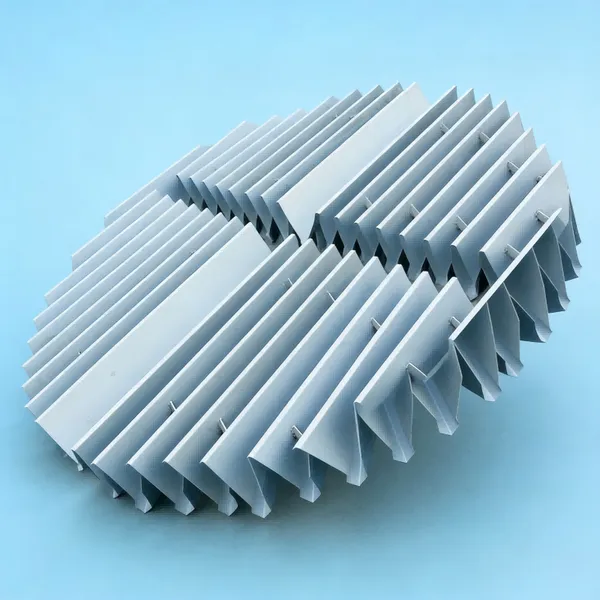 Read More

Contact Us
Recommended Products
-
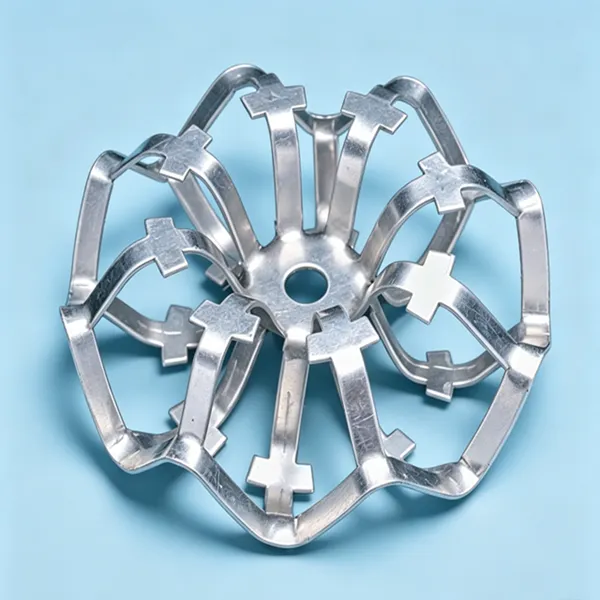
 Pingxiang Daier Metal Rosette Ring | Anti-Fouling Random Packing for High-Capacity ScrubbersNegotiableMOQ: 1 Cubic Meter
-
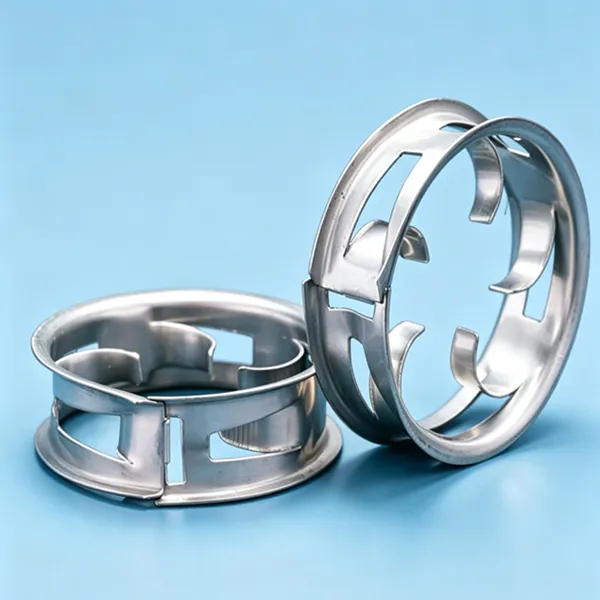
Pingxiang Daier Metal SMR Super Mini Ring Packing | High-Efficiency Random Packing for DistillationNegotiableMOQ: 1 Cubic Meter
-
Pingxiang Daier D-A-I-E-R Metal 84 Inner Arc VSP Ring Tower Packing SS316L Mo≥2.0% for DistillationNegotiableMOQ: 1 Cubic Meter
-
Pingxiang Daier Metal Conjugated Ring for High-Temperature Distillation TowersNegotiableMOQ: 1 Cubic Meter
-
Pingxiang Daier Metal Intalox Saddle for Distillation & Scrubbing SystemsNegotiableMOQ: 1 Cubic Meter
-
Pingxiang Daier Metal Mesh Dixon Ring Packing for High-Purity DistillationNegotiableMOQ: 1 Cubic Meter
-
Pingxiang Daier Metal Cascade Mini Ring for Distillation & Scrubbing TowersNegotiableMOQ: 1 Cubic Meter
-
Pingxiang Daier Plastic Conjugate Ring for Chemical Absorption & ScrubbingNegotiableMOQ: 1 Cubic Meter
-
Pingxiang Daier Plastic High Flow Ring for Gas Scrubbing & Absorption TowersNegotiableMOQ: 1 Cubic Meter
-
Pingxiang Daier VSP/84 Plastic Inner Arc Ring for Tower Packing & Gas Scrubbing SystemsNegotiableMOQ: 1 Cubic Meter
-
Pingxiang Daier Plastic Lantern Ring Packing | DAIER Chemical Packing for Vacuum Distillation & Gas Absorption | High Void Ratio Mass Transfer MediaNegotiableMOQ: 1 Cubic Meter
-
Pingxiang Daier Kostar Garland (Crown Type Teller Rosette Ring) | DAIER Chemical Packing for High Load Scrubbing | Robust Tower Internal EngineeringNegotiableMOQ: 1 Cubic Meter
-
Pingxiang Daier Thorny Flower Ring Packing | DAIER Chemical Packing for Gas Scrubbing, Distillation | High Surface Area Mass Transfer MediaNegotiableMOQ: 1 Cubic Meter
-
Pingxiang Daier Plastic Teller Rosette Ring Packing | DAIER Chemical Packing for Gas Scrubbing, VOC Treatment | Low Pressure Drop Mass Transfer MediaNegotiableMOQ: 1 Cubic Meter
-
Pingxiang DAIER Plastic Snowflake Ring for Gas Scrubbing & AbsorptionNegotiableMOQ: 1 Cubic Meter
-
Pingxiang DAIER Plastic Raschig Ring for Gas Scrubbing & AbsorptionNegotiableMOQ: 1 Cubic Meter
-
Pingxiang DAIER Plastic Q-Pack for Gas Scrubbing & Mass TransferNegotiableMOQ: 1 Cubic Meter
-
Pingxiang DAIER Plastic Tri Pack for Gas Scrubbing & Mass TransferNegotiableMOQ: 1 Cubic Meter
-
Pingxiang DAIER Plastic NUPAC Packing for Gas Scrubbing & Mass Transfer ColumnsNegotiableMOQ: 1 Cubic Meter
-
Pingxiang Daier Plastic Pall Ring | High-Throughput Random Packing for Gas Scrubbing & Mass Transfer SolutionsNegotiableMOQ: 1 Cubic Meter